What questions do you have about chord changes and harmony?
Be as specific as possible.
Leave a comment on this page!
And enter your name and email if you’re interested in learning more about an upcoming class on chord changes.
What questions do you have about chord changes and harmony?
Be as specific as possible.
Leave a comment on this page!
And enter your name and email if you’re interested in learning more about an upcoming class on chord changes.
The pentatonic scales are heard in music around the world. The five note scale has created many melodies. The minor pentatonic has more of a bluesy feel and is actually the same as the ‘blues scale’ minus one note.
The minor pentatonic scale starts on the root. And the next notes are the minor third, perfect fourth, perfect fifth, and minor seventh.
Here I’m writing out the entire range of the G minor pentatonic scale for saxophone with fingerings. Being comfortable across the range of the saxophone is important in your development as a musician. It gives you more options.
Let me know if this is useful!
In the key of G, the notes are:
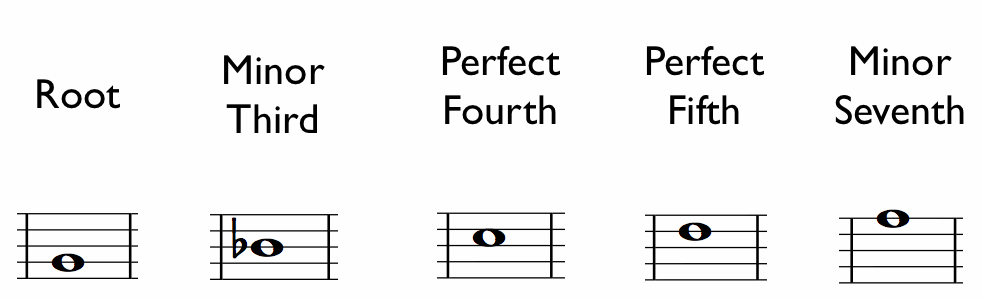
Saxophone G Minor Pentatonic
Here are the fingers for saxophone.
Saxophone G Minor Pentatonic
And here’s the G minor pentatonic scale over the full range (without altissimo) of the saxophone.
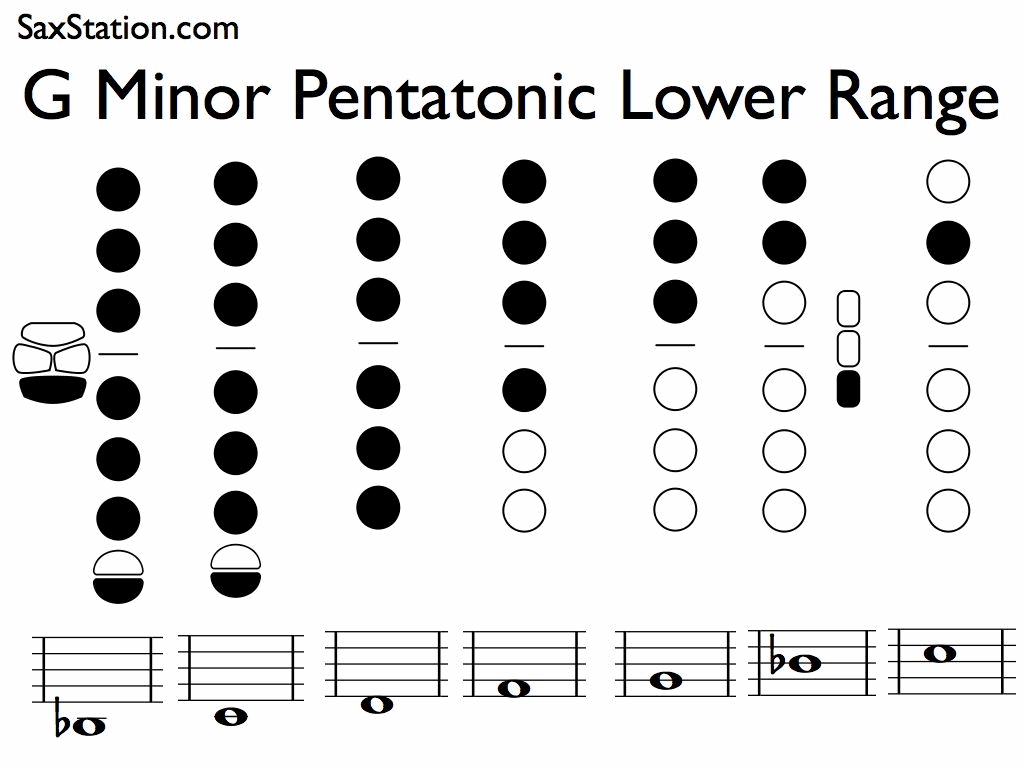
Saxophone G Minor Pentatonic Lower Range
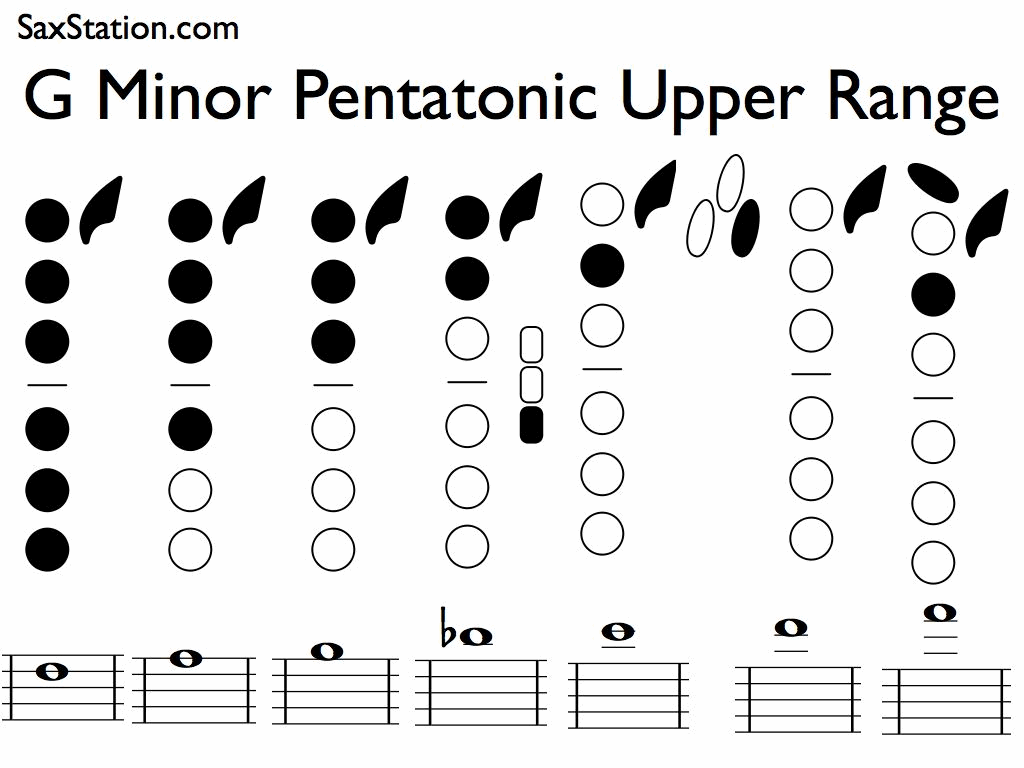
Saxophone G Minor Pentatonic Upper Range
Feeling a bit nervous before taking a solo in front of an audience is natural and probably a good thing. However, having your nerves take over and prevent you from playing your horn can feel awful. Here are some ideas to help restrain your butterflies and play an awesome solo on sax.
In the same vein as some stuff that Eddie Harris did.
Setting up a simple bluesy groove and improvising over it.
Try it out and let me know how it goes!
The pentatonic and blues scales are fun to play around with and give you a certain bluesy sound.
Minor pentatonic has one less note than the blues scale, so they’re practically the same scale.
That means the blues scale is a pentatonic minor scale with the raised fourth aka lowered fifth (in addition to the perfect fourth).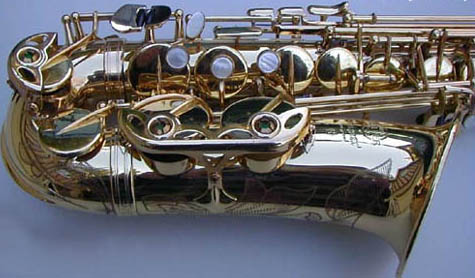
1,-3, 4, 5, -7
with the minus sign meaning ‘minor’
is the minor pentatonic.
1,-3, 4, #4, 5, -7
is the blues scale.
In the key of Bb (concert), the blues scale on tenor sax is
C, Eb, F, F#, G, Bb
on alto in Bb (concert), it’s
G, Bb, C, C#, D, F
To check out an application of the minor pentatonic scale, you can look at the free lesson on the tune Cantaloupe Island which uses the minor pentatonic scale exclusively for the melody and in which you can apply the blues scale over improvisation.
Early on, you’re taught to play only the ‘right’ notes.
Then you find out you can add color with tension and notes outside of the ‘right’ notes.
Great jazz musicians will take you on a journey, but they’ll bring you back with resolution.

Got this message from Andrew:
Another thing I HAVE LEARNED; first, there is never a wrong note, is that the resolution you are seeking? contrast, suspense color. It’s in the resolution, never Wrong.
My response:
That’s pretty true about resolution, some jazz guys get waaaay out and then come back. But if you never make it back…. haha
I think it’s a balance of you, the group, and the audience. If the audience is ready to go where you’re taking them and you lead them there then it will work. The tension and color will be a cool thing that holds their interest.
If you just turbo-charge light years away from anything they’ve ever heard, it may not work as well.
For the debut of Stravinsky’s ‘Rite of Spring’ in 1913, the audience’s reaction was very negative, but not too long after the premier, the public loved it.
To hear more about the Stravinsky and some other ideas about musicality in language, check this out:
View Full Audio on WNYC
The class is open and live at
You can get four free sax improvisation lessons there.
You’re about to win a free copy of my brand new guide Saxophone Improvisation!
Sometimes getting started with improvisation can be tough. But playing an awesome solo means expressing yourself, bringing out the music, pride in what you did, connecting with the crowd, and it gives you confidence with your music.
Here’s the deal…
This is the official kickoff contest of my Saxophone Improvisation and I wanted to make sure I did something really cool.
When you win access to the Saxophone Improvisation, you get a step by step system for getting started on sax improvisation and progressing with your solos. You’ll get down to the root of improvisation and when you’re done, you’ll have the ability to groove over any tune like a master.
You’ll also get access to private pages where you can post your goals, your hurdles & your questions and I personally will help you out and keep you accountable. This isn’t just a book that you read.
I’ve personally learned from master musicians and followed this system to sit in and improvise with musicians around the country and world- even on a secondary instrument which I hadn’t played seriously in years.
Check out the first pieces for free and then make your decision:
I appreciate your help in spreading the word about the class.
One person this month (December 2010) will gain free access to the entire Saxophone Improvisation system along with all updates.
First Step:
The first step is to register for the contest by leaving a comment below answering the following two questions:
1. Why should you be chosen to be a part of the Saxophone Improvisation by Sax Station class?
2. Why do you want to learn saxophone improv skills?
When you answer these questions remember that you are getting personal access. Saxophone lessons cost $60 plus and help you with a few issues each lesson. This class last for four weeks with lessons delivered by email and set up on the site including audio and video.
Second Step:
The second step is get some points. The three people with the most points at the end of the contest will win free access to the Saxophone Improvisation by Sax Station. (Everyone else is still a winner – you’ll have to enter the contest to find out why!)
Here’s How You Get Points:
Contest Rules:
All participants are required to tally up their own points. Points must be submitted (emailed) to jammin (at) saxstation.com with proof of claimed points. You get points if you’re already on the facebook page or have already filled out the improvisation survey. (Previous comments and other activities do not count for the contest).
All submissions must be received by the end December 31, 2010 . I will then verify the points and determine the winner.
What to Do Now:
Enter a comment below answering the above two questions to officially register for the contest. Be sure to use your real name and valid email address or you will not be eligible to win.
Then go spread the word! Tell other people about the contest and keep track of your points and links to verify your points.
By the time you’ve finished reading this message, some people have already started working on it, so get moving!
– Neal Battaglia
P.S. Remember to leave a comment below to officially register & get an immediate 250 points.
P.P.S. Everyone’s a winner… Trust me on this one.
Link to this page:
http://SaxStation.com/contest-your-chance-to-get-saxophone-improvisation
Another legit evening at the coffeehouse jam.
Pat’s band is still playing great music! And I learned a few things from the experience.
 My friend Christopher unfortunately couldn’t make it because he was sick.
However, Veronica, who had been in a couple of music classes I took was there. Talked with her for a minute after I arrived.
And she killed it on trombone. A couple musicians were talking about how the feeling she played with and how she listened was right on. Technique is something that anybody can accomplish with some time in the woodshed, listening and getting the feeling right takes musical awareness and the right attitude.
I sat and enjoyed the first two sets, saw my friend John who plays in the salsa band, talked with him and the piano player for a minute during a break. Heard a few music stories.
Those two had played music with each other a long time back. Seemed like a lot of the people in the band and audience were connected. Cool vibe to the crowd, seemed like everyone enjoyed themselves.
The song I played was Red Clay. Not the melody, the piano player picked up a six string electric bass and led the melody as Pat, who was mostly playing soprano sax, took over on the keyboard. And the bass player kept playing upright bass, so we had some double bass action going on.
Pat motioned for me to come over to the keyboard right before the song and asked if I knew Red Clay, said I didn’t know it too well but had heard it, she gave me the key of the song (a little nicer than Michael) and told me to come up and solo during the song.
I went up, and just playing with that band was a lot of fun, they really listen and play with you and make the soloist stand out. Truthfully, I was a little nervous since I love the song Red Clay, but by no means had mastered it. So part of my energy went into concentrating on what I was doing and a little less on listening.
Really knowing the music, really knowing the technique of the saxophone, etc all help free you from worrying about things other than just playing the music.
My solo went pretty well, I was having fun playing with the group and the audience seemed to like it. Definitely came back home and started working on learning Red Clay though!
They played a few other songs that are solid tunes that I want to master, maybe learn some ideas from the melodies in all the keys. Including Footprints, All Blues, and Happy People.
Pat described her group as playing gospel jazz or soul jazz. So some jazz ‘standards’ but not completely.
One thing that Veronica, Pat, John Wineglass and some others would do was setting up an idea and grooving with it.
If you play a cool idea once in a solo, it probably sounds good and it might work well with the song.
But if you repeat it, the rhythm section and the audience will be familiar with that idea. The rhythm section may jump on board and really get into the idea with you. The other horns or strings may echo what you play with a counter line. If you play the idea three or four times, you really can get into it and you set up a groove with the idea.
You can play the exact same idea several times. If the chords change behind it or if anyone else changes what they’re playing, the combination of your idea and the band will be a new combination.
Or you can play the rhythm of the idea repeated and change the notes.
Or you can set up a groove with the other dimensions of music. Your call.
If it’s a solid musical idea, you can develop it and run with it.
Developing one great idea with some repetition will almost definitely sound better than playing one great idea quickly and moving on to several other rapid fire crappy ideas.
Think about melodies, they have motifs that repeat. They draw the audience in, even non-musicians can hum along.
Maceo Parker puts on a great show, he will often groove on a single idea.
Just something I thought about when I was there. Any thoughts on the matter?
Neal.
One thing, what is the secret to Improvisation …in one word?
Thanks
-Robert
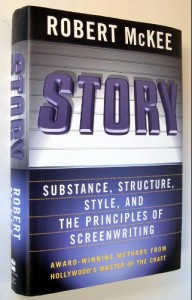
Thought about Robert’s question for a little while. And “story” is my answer.
All the technique, emotion, and rhythm in the world doesn’t matter if it doesn’t ‘say’ anything, if it doesn’t tell a story.
Stories allow us to relate experiences, teach, and entertain. Cave men told stories and we can even see them as cave paintings today. We pass stories along through the generations. Odysseus and Achilles still live because their stories continue to be told.
Shakespeare helped formed the English language.
Story is what makes a movie great. Although many crappy movies lack story and think that it can be covered with special effects and editing.
Artwork has story behind it. Think about something like ‘Guernica‘ by Picasso. There are tons of layers in that one. We talked about it during Spanish class in school.
Stories are memorable. You may not remember all the details, but the core of that story will be clear. Like a melody.
Your solo on saxophone should tell a story.
A good sound, good technique, all the elements of music facilitate your ability to tell a story.
The image above is the book called ‘Story’ by Robert McKee, it’s highly regarded in Hollywood for those who aspire to write screenplays.
It’s not easy to tell a great story.
But it gives meaning to what you play on saxophone.
What do you think?
Not talking about Bill Clinton (though playing some sax is an admirable trait).
Sometimes you hear a politician say something, but not really say anything.

When you play music, tell a story.
Don’t just throw in rhetoric because it ‘sounds good’.
Learning from other musicians is important and is a necessary step to finding your own sound, in my opinion.
It’s not just about playing something polished though.
Something with substance will be better than something that’s cleaner but lacks story.
You could play a Charlie Parker lick followed by a Sonny Rollins lick followed by a John Coltrane lick.
OR maybe you could play a John Coltrane Lick then a Charlie Parker lick and THEN a Sonny Rollins lick.
Each lick would probably sound good. They were crafted by saxophone masters.
If they sounded good together, in the order you played them, you would be a bit closer to saying something on your saxophone.
If you included an idea from someone else that ‘fits’ that’s a cool thing, you’re connecting with music.
Using an idea (or a couple) you have heard for part of your solo would probably even be better than playing three licks that you created yourself while meditating in the desert, if you play those same three licks the same way in every song and every solo.
You can get some volume out of your saxophone. With a microphone you can get more.
Play something that’s worth hearing, even if it’s not as clean as that thing you’ve played so many times before.

Want to play saxophone, but feeling lost and not sure how to get started?
In this online/downloadable class you will see methodical lessons in a sequence and you can get feedback and ask questions at any point.
Learn more
Want to take your playing to the next level?
You’ll learn fundamental saxophone skills, building past the basics. Master rhythms. Learn about phrasing, tone, and more. Here you will get feedback which is crucial to developing good habits.
Learn more